




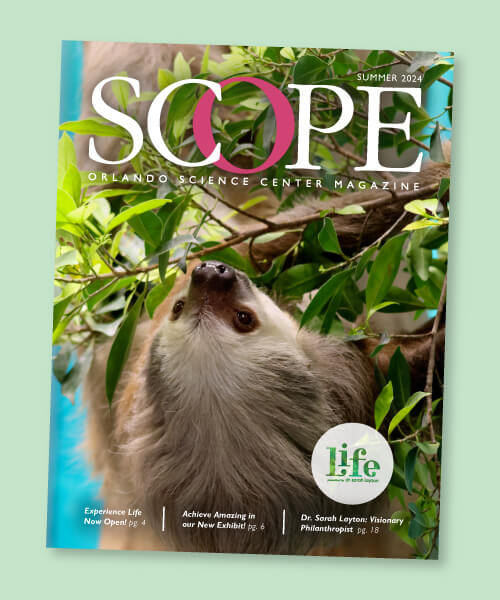
Exhibit Gallery

Now Open on Level 1

This hands-on exhibit hall celebrates the richness of the natural world, with a special focus on the diverse ecosystems of Central Florida. Visitors discover the insects, plants and animals of coral reefs, salt marshes, mangrove swamps and other Florida environments. They learn how living and non-living things interact with each other and their environment.

The dramatic centerpiece of NatureWorks is Florida’s Habitats, a glimpse into the natural world of Central Florida. In this realistic exhibit area, visitors explore the distinctive environments of Sand Pine Scrub, Cypress Swamp, Pine Flatwoods and Sinkhole Lake. There are also ample opportunities for guests to encounter live animals during regularly scheduled presentations.

  • Observe a typical cypress swamp, complete with live alligators
  • See how sea turtles make their nest at the sandy beach
  • Discover the intricate system of roots at the mangrove swamp
  • Watch how bees build their hive, care for young and gather nectar at the BeeHive Encounter


If you haven't met Tim Walsh, he manages our NatureWorks exhibit. There's more to Tim than NatureWorks. He's regarded as an expert on turtles and recently participated in a report on the Suwannee Cooter, a protected turtle. He describes the paper like this:

“This project came about from a couple of colleagues finding large collection of butchered (for human consumption) turtles at a rural dump site. The species was identified as the protected Suwannee Cooter. This is a Species of Special Concern listed by the Florida Fish and Wildlife Conservation Commission. This find illustrated a harvest that surely exceeded the allowable take for this species. The purpose of the project was to show that this type of exploitation still exists with Florida turtles and also to describe why this is not acceptable for healthy turtle populations.

Turtles require many years (10-20) to reach maturity and their whole reproductive strategy is to reproduce as much as possible for as long as possible. Many turtles live to be 50+ years of age. It is mostly the large females that are removed as food…larger turtle=more meat. So in effect, you are removing the most important breeders from the population and the population can crash. We compare demographic data from the dump site specimens to that of the most studied population in Rainbow River.

We also make recommendations in the paper for the FFWCC to consider as additional protection for Florida’s turtles. At the time of the paper going to press, these recommendations and others were being implemented by the FFWCC due to other reasons. In July 2009 the FFWCC issued a final rule on freshwater turtle take that is the most restrictive and comprehensive conservation measure for freshwater turtles in the country.”

Thanks for your work on this Tim. Hopefully, it will affect some change!


Bookmark and Share

We now have a new bee colony installed in the NatureWorks observation hive. The hive numbers about 2000-3000 bees. Take the time to look for the queen (marked with a red dot) as she has been visible a couple of times over the last few days. The colony is not flying much right now due to the cold weather and they are feeding off of their own stored honey for nourishment.

Read more...


Bookmark and Share

It is no secret around here (at least with the staff) that I am a big fan of turtles. I do not have the nickname of  “Turtle Tim” for nothing! For this reason I am excited about the event that took place on Tuesday, December 29, 2009. Filmmakers from the non-profit Equinox Documentaries, Inc. were in the NatureWorks “Cypress swamp” to shoot underwater footage of our native Florida turtles as part of a short documentary about a “turtle tagging” program on the Wekiva River system.

Read more...


Bookmark and Share

Next time you visit NatureWorks be sure to grab one of our new Exhibit Experience Guides. These guides are full of fun facts and questions to make you think about the animals and habitats that you see. As always, if you have any questions about what is in the guide, feel free to ask a NatureWorks staff or volunteer...we are always happy to share our knowledge with you!

On the back of the guide you will see an activity that you can do at home, the Backyard Trackyard. This activity involves capturing animal tracks in your own backyard. After you have your tracks, visit the websites below to help you identify them.

bear-tracker.com
www.archbold-station.org/discoveringflscrub/unit1/partb.html
http://enature.com/zipguides/customguide.asp?guidetype=tracks


Bookmark and Share

Orlando Science Center • 777 East Princeton Street • Orlando, Florida 32803 • Phone: 407.514.2000 • Toll Free: 888.OSC.4FUN • Email: Info@osc.org
Funded in part by United Arts of Central Florida and State of Florida, Department of State, Division of Cultural Affairs
and the Florida Arts Council, and the National Endowment for the Arts. Privacy Policy